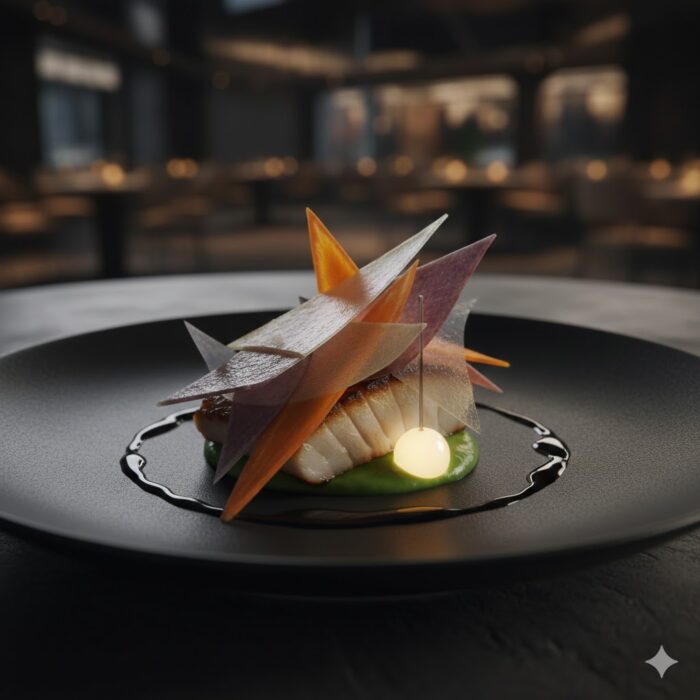
The fine dining landscape of 2026 has moved beyond mere “molecular” tricks, shifting toward a balance of immersive storytelling and radical sustainability.
As diners seek authenticity over artifice, the plate has become a medium for environmental and cultural expression.
The Systematic Guide:
-
Zero-Waste Aesthetics: The future is “claws and carcasses.” Chefs are incorporating traditionally discarded elements—like fish collars, vegetable stems, and dehydrated peels—into the design, proving that sustainability can be luxurious.
-
Hyper-Local Terroir: Plating now reflects a “sense of place” with extreme precision. Expect to see ingredients like “wild mountain mushrooms” or heirloom pulses arranged in “Landscape Techniques” that mimic the garden or forest floor from which they were foraged.
-
The “Hide and Seek” Technique: Modern chefs are using “Kitchen Couture” to create mystery. Thinly sliced radishes, puffed rice crackers, or delicate tuiles are layered over the main protein to encourage the diner to “interact” with the dish to reveal its heart.
-
Tech-Enhanced Precision: While the look is organic, the execution is high-tech. AI-powered tools and 3D food printing are being used to create intricate, geometric garnishes and perfect quenelles that would be impossible to replicate by hand alone.
Conclusion
The future of culinary presentation is intentional and authentic.
By blending cutting-edge technology with a deep respect for “forgotten” ingredients and local heritage, the modern chef creates more than a meal — they craft a multisensory, sustainable experience that stays with the diner long after the plate is cleared.