A chef’s repertoire is often judged by the quality of their sauces. Transitioning from the dairy-rich Béchamel to the temperamental, egg-based Hollandaise requires a deep understanding of protein structures and temperature thresholds.
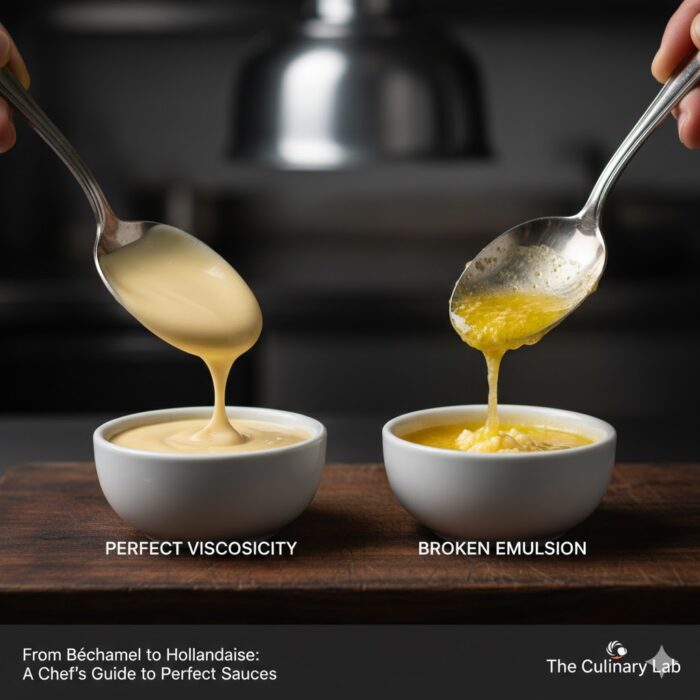
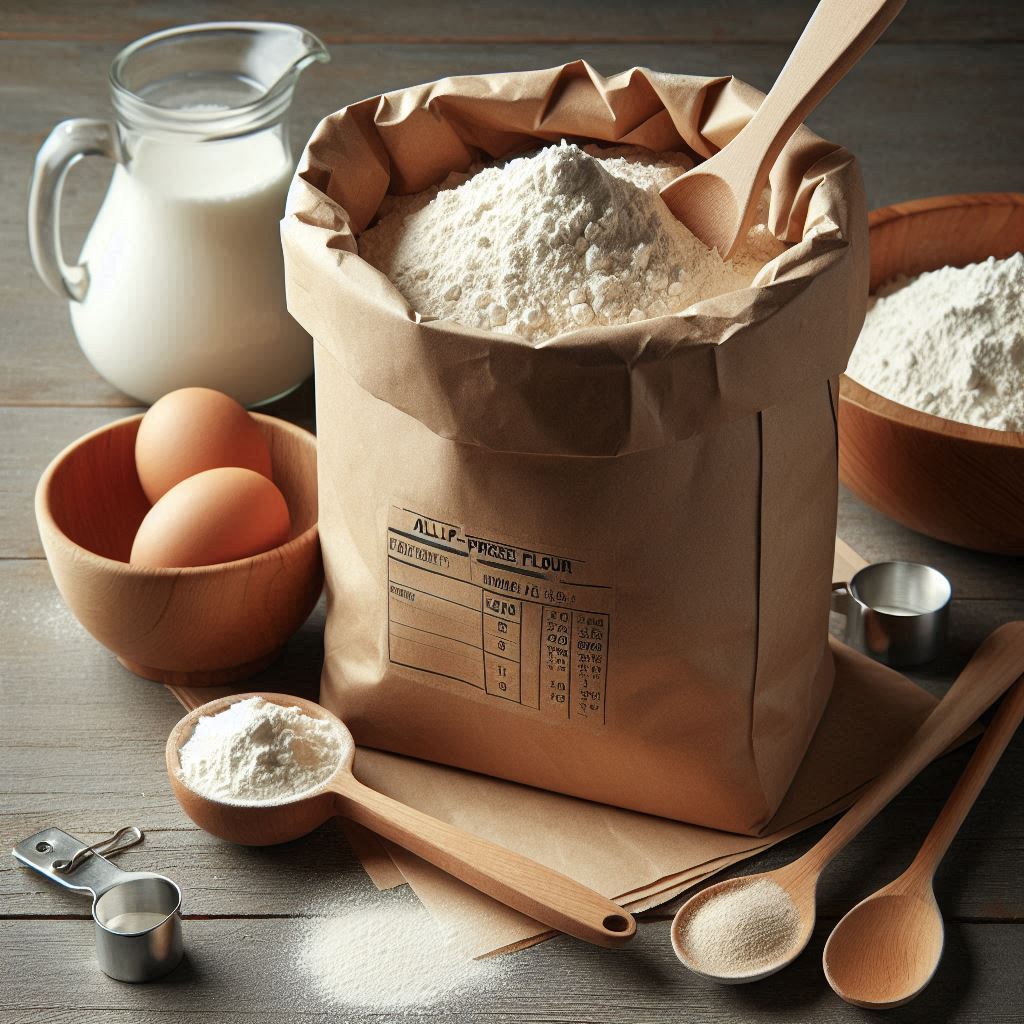
While Béchamel relies on the stability of a flour-based roux, Hollandaise is a high-wire act of emulsification.
The secret to perfection lies in viscosity management. A master sauce should achieve nappe — coating the back of a spoon with a silky, mirror-like finish.
Achieving this consistently requires patience: tempering your liquids, whisking with rhythmic vigor, and knowing exactly when to pull the pan from the flame.
Mastery of these two extremes — starch-thickened and fat-emulsified — grants you the technical keys to the entire classical French sauce library.