In a professional kitchen, grease is an occupational occurrence. Whether it’s a splatter from the sauté station or a drip from the deep fryer, your pristine chef whites are constantly under fire.
Because grease is an organic oil, it binds to fabric fibers instantly, making it one of the hardest stains to remove. However, with the right “salvage mission” protocol, you can keep your uniform looking sharp for every shift.
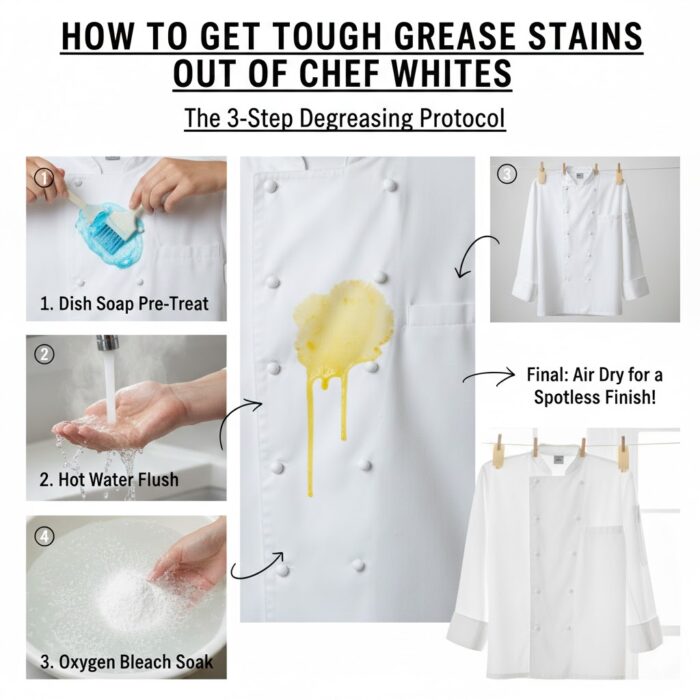
The Three-Step Degreasing Protocol
-
The Dish Soap Pre-Treat: Since grease is an oil, standard laundry detergent often isn’t enough. Reach for a high-quality grease-cutting dish soap (like Dawn). Apply it directly to the dry stain and rub it in with a soft brush. Let it sit for at least 30 minutes to break down the molecular bond of the oil.
-
The Boiling Water Flush: After pre-treating, rinse the area with the hottest water the fabric can handle. Heat helps melt the grease and flush it out of the weave. For heavy stains, pour the hot water through the back of the fabric to push the grease out rather than deeper in.
-
The Oxygen Bleach Soak: If a yellow shadow remains, soak the entire coat in a mixture of warm water and an oxygen-based whitener (like OxiClean) overnight. This lifts the remaining organic pigments without damaging the fabric like harsh chlorine bleach can.
The Golden Rule: Never Heat Dry a Stained Coat
The biggest mistake you can make is throwing your whites into the dryer before checking the stain. The high heat of a dryer will “set” the grease permanently into the fibers. Always air-dry your coat after the first wash; if the stain is still there, repeat the pre-treatment.
Maintaining your uniform is a sign of professional discipline. By acting fast and using degreasing agents rather than just standard detergent, you can extend the life of your chef whites and stay looking sharp on the line.