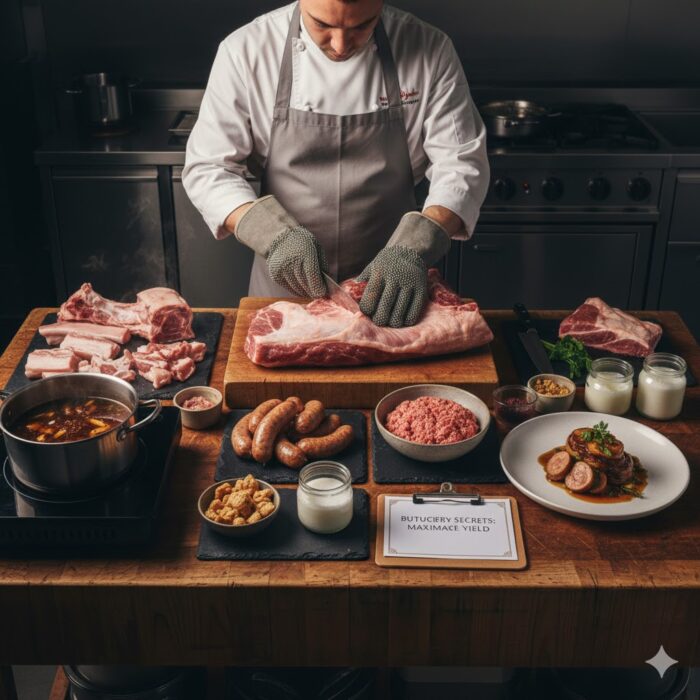
In the high-stakes world of culinary management, the greatest “secret” isn’t a spice blend — it’s yield maximization. Adopting a nose-to-tail philosophy isn’t just an ethical or artisanal choice; it is a rigorous financial strategy.
When you purchase whole animals or primals instead of pre-fabricated cuts, you are buying flavor at a fraction of the cost, provided you know how to unlock it.
The Economics of the Whole Animal
The price per pound of a center-cut filet is high because you are paying for the labor of the butcher and the waste of the trim. By bringing butchery in-house, you reclaim that margin.
-
The Value of Trim: High-end burger blends, tartares, and house-made sausages are created from the “scraps” of premium primals. What a supplier would discard, a chef turns into a high-margin signature item.
-
Liquid Gold (Bones & Connective Tissue): Buying pre-made stock is expensive and often lacks depth. Using the carcass to produce house-made demi-glace and bone broths reduces your reliance on external bases and creates a superior flavor profile.
-
Secondary Cuts as Primary Features: Skilled butchery reveals “secret” cuts like the Flat Iron, Tri-Tip, or Oxtail. When prepared with advanced techniques like sous-vide or long-form braising, these lower-cost parts can be priced as premium entrees.
-
Fat Rendering: Nothing beats the flavor of house-rendered lard, tallow, or duck fat. Instead of buying processed oils, use the animal’s own fat to confit, sear, and flavor your dishes.
The Bottom Line
Mastering butchery is about respecting the ingredient and the invoice. By utilizing every ounce of the animal, you decrease your food cost percentage while increasing the perceived value of your menu. In a professional kitchen, nothing goes to waste—it only changes form.