In the hierarchy of kitchen skills, sauce-making is the ultimate litmus test for a chef’s technical precision.
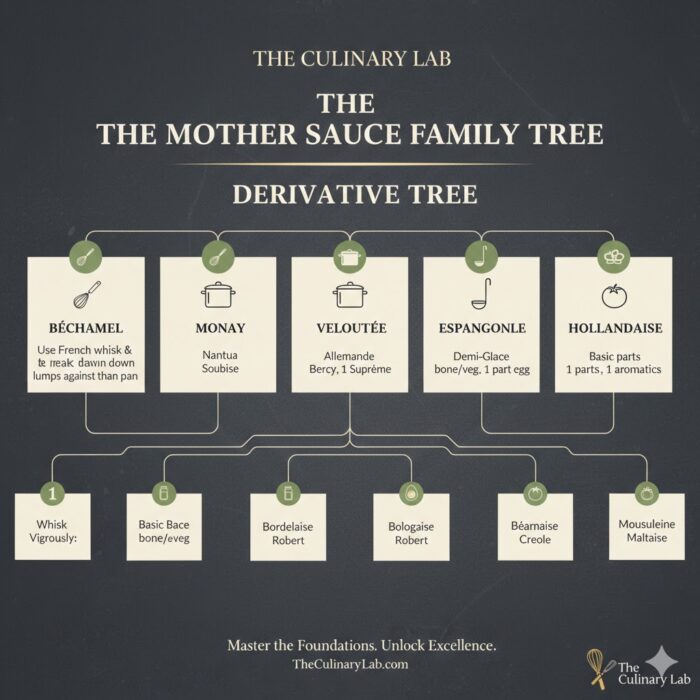
The Five Mother Sauces — Béchamel, Velouté, Espagnole, Sauce Tomate, and Hollandaise — serve as the foundation for nearly every classical sauce in existence.
However, the difference between a silk-smooth emulsion and a broken, oily mess often comes down to a few degrees of temperature or the speed of a whisk.
The Anatomy of a Perfect Sauce
To ensure your sauces never break, you must respect the science of suspension and emulsification:
-
Temperature Control: For egg-based emulsions like Hollandaise, heat is the enemy. Keep your double boiler at a gentle simmer; if the eggs scramble, the emulsion is lost.
-
The Power of Ratios: A standard roux (equal parts fat and flour) must be cooked to the correct stage—white, blonde, or brown—to ensure the starch granules swell properly without clumping.
-
The Slow Stream: When incorporating liquids into a roux or fat into yolks, the first 20% of the addition is the most critical. Add it drop-by-drop to establish the bond.
-
Stabilizers: Using a touch of mustard in a vinaigrette or a splash of heavy cream in a reduction can act as an insurance policy, helping to hold the sauce together under heat.
A broken sauce is a sign of rushed technique. By mastering the delicate balance of heat, fat, and liquid, you elevate your cooking from amateur to artisanal. Precision today prevents waste tomorrow