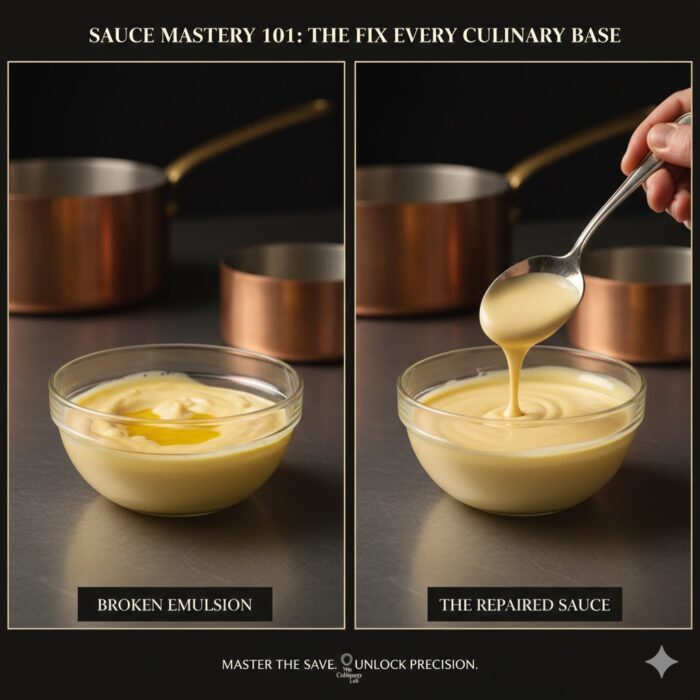
In the heat of service, even the most seasoned chefs encounter a sauce that refuses to cooperate.
Whether it’s a broken emulsion or a grainy texture, the difference between a wasted batch and a five-star dish lies in your ability to apply a technical fix.
Sauce mastery is less about avoiding mistakes and more about understanding the chemistry required to correct them.
The Universal Repair Kit
-
For Broken Emulsions (Hollandaise/Mayonnaise): When fat separates from the base, you’ve lost your protein bond. The “New Yolk” method is the gold standard: whisk a fresh egg yolk with a teaspoon of warm water in a clean bowl, then slowly stream your broken sauce into it. The fresh lecithin will pull the fats back into a stable, velvety state.
-
For Starch-Based Lumps (Béchamel/Velouté): Lumps occur when flour granules hydrate unevenly. The fix is mechanical: an immediate pass through a fine-mesh chinois or a high-speed blitz with an immersion blender. To prevent this, always ensure your roux is cooked through and your liquid is added in stages.
-
For Over-Reduction: If a sauce has become too salty or intense through evaporation, whisking in cold, unsalted butter—a technique known as monter au beurre—adds fat that coats the palate and mellows the salt perception without diluting the body of the sauce.
A chef’s greatest asset is a cool head and a technical toolkit. By understanding how proteins and starches interact, you can salvage almost any base and maintain the consistency your kitchen demands.