In today’s culinary landscape, sustainability is no longer a niche trend; it’s a fundamental pillar of professional kitchen management.
Reducing waste isn’t just about environmental responsibility; it’s a direct pathway to enhanced profitability, operational efficiency, and a more innovative menu.
By implementing targeted strategies, chefs can transform their kitchens into models of ecological and economic intelligence.
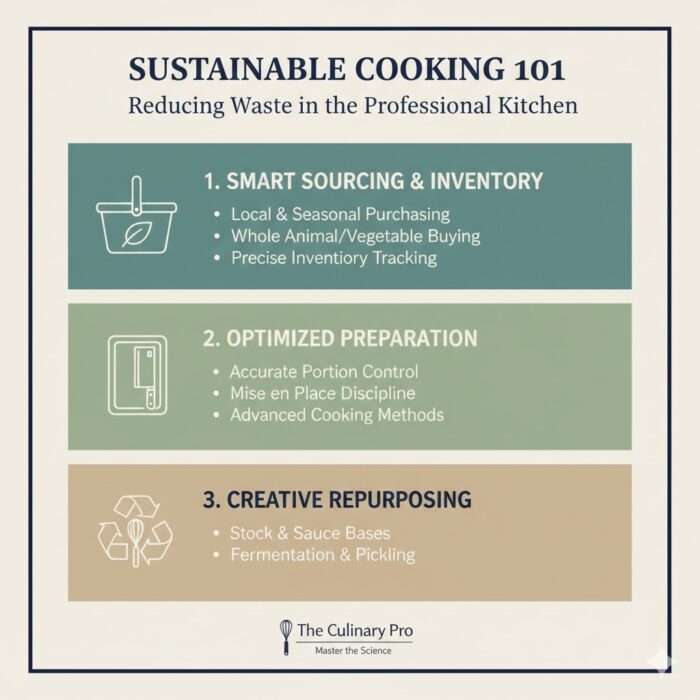
The Three Pillars of Waste Reduction
Effective waste reduction in a professional setting relies on a holistic approach that integrates purchasing, preparation, and creative reuse.
-
Smart Sourcing & Inventory Management:
-
Local & Seasonal Purchasing: Reduces transportation waste and ensures peak freshness, minimizing spoilage.
-
Whole Animal/Vegetable Buying: As discussed in “Butchery Secrets” and “Root-to-Stem,” buying full ingredients drastically cuts costs and allows for comprehensive utilization.
-
Precise Inventory Tracking: Advanced software or meticulous manual tracking prevents over-ordering and identifies slow-moving items, reducing expired stock.
-
Optimized Preparation Techniques:
-
Accurate Portion Control: Standardized portioning minimizes plate waste and ensures consistent food cost.
-
Mise en Place Discipline: Organized prep leads to fewer errors, less cross-contamination, and efficient use of all ingredients, including trim.
-
Advanced Cooking Methods: Techniques like sous-vide or braising can tenderize tougher cuts, ensuring that less desirable parts of an animal or vegetable are palatable and appealing.
-
Creative Repurposing & Upcycling:
-
Scrap Utilization: Transform vegetable peels into crisps, herb stems into infused oils, and bread ends into gourmet croutons or panzanella.
-
Stock & Sauce Bases: Bones, vegetable trim, and spent coffee grounds (for smoke flavor) are invaluable for creating house-made stocks, broths, and glazes.
-
Fermentation & Pickling: Extend the life of produce that’s nearing its end. Fermented vegetable scraps or fruit rinds can become unique condiments or garnishes.
The Bottom Line
Implementing sustainable cooking practices is a strategic investment.
It enhances your brand reputation, appeals to a growing eco-conscious clientele, and most importantly, directly impacts your profitability by turning potential waste into valuable culinary assets. The professional kitchen of the future leaves nothing behind.