In the modern kitchen, the most innovative tool isn’t a sous-vide machine — it’s a change in perspective.
Root-to-stem cooking is the botanical equivalent of nose-to-tail butchery, a philosophy that treats every part of the plant as a premium ingredient.
By utilizing the peels, stalks, and leaves we once discarded, chefs unlock a spectrum of textures and flavors that define sustainable fine dining.
The Anatomy of a Plant: Hidden Potential
Sustainability is often born from necessity, but in the hands of a skilled chef, it becomes a luxury. Every “byproduct” offers a unique culinary application:
-
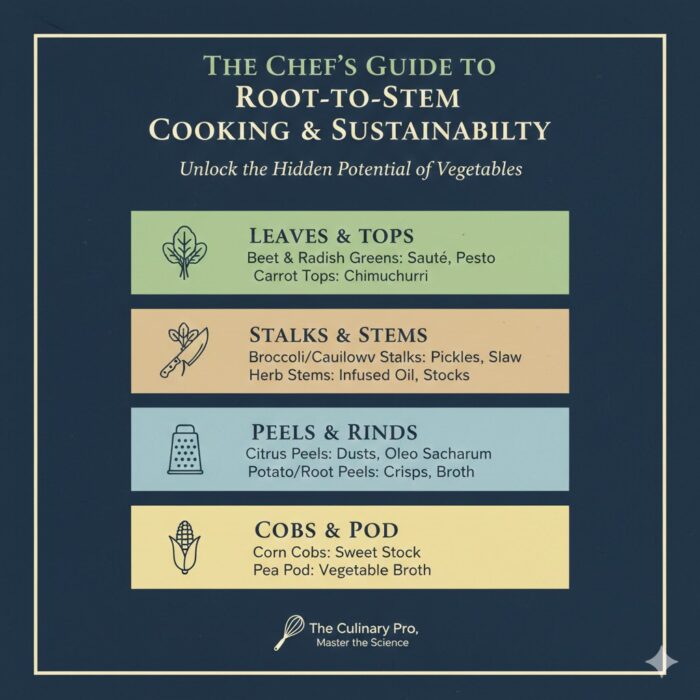
Beet & Radish Tops: These greens are often more flavorful than the roots. Sauté them with garlic or blend them into a vibrant, peppery pesto.
-
Cauliflower & Broccoli Stalks: The cores are the sweetest part of the vegetable. Shave them raw into a carpaccio or pickle them for a sharp, crunchy garnish.
-
Corn Cobs & Pea Pods: While too fibrous to eat, these are flavor powerhouses. Simmer them to create delicate, golden vegetable broths that serve as the base for high-end risottos.
-
Citrus & Potato Peels: When dehydrated and pulverized, they become aromatic dusts; when fried, they provide a rustic, earthy crunch that adds dimension to plated appetizers.
Root-to-stem cooking is more than a trend; it is a return to a more mindful, respectful relationship with our land.
When we stop seeing “scraps” and start seeing “solutions,” we create a kitchen that is ecologically sound and creatively limitless