In a globalized culinary world, the difference between a successful bake and a flat failure often lies in the math.
Whether you are following a classic French pastry recipe or a modern American guide, mastering the bridge between grams and ounces is essential.
Relying on “guesstimates” leads to inconsistent results, especially with dry ingredients like flour, where weight is far more accurate than volume.
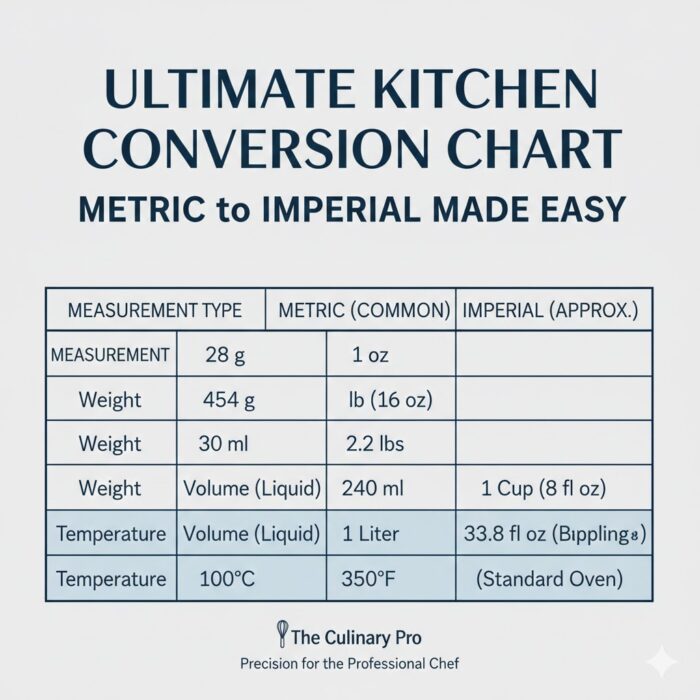
Precision is the hallmark of a professional. By utilizing a standardized conversion chart, you remove the friction of mental math and ensure that your ratios — the “science” of the kitchen — remain perfect across any border or unit of measure.
Quick Reference Conversion Chart
Conclusion
Consistency is what separates a hobbyist from a chef. Keeping this conversion data accessible in your workspace ensures your dishes remain technically sound and reproducible, regardless of the recipe’s origin.