In a high-performing kitchen, the trash bin is often a repository for untapped potential. A Zero-Waste Kitchen isn’t just a sustainable choice; it’s a masterclass in flavor extraction and economic efficiency.
By viewing every byproduct as a primary ingredient in waiting, chefs can elevate their culinary output while drastically lowering food costs.
The secret lies in understanding the chemical makeup of scraps. Stems, peels, and rinds often contain more aromatic compounds and pectin than the “choice” cuts.
When treated with the right technique — be it fermentation, dehydration, or high-heat roasting — these cast-offs become the signature elements that define a gourmet plate.
The Chef’s Upcycling Toolkit
-
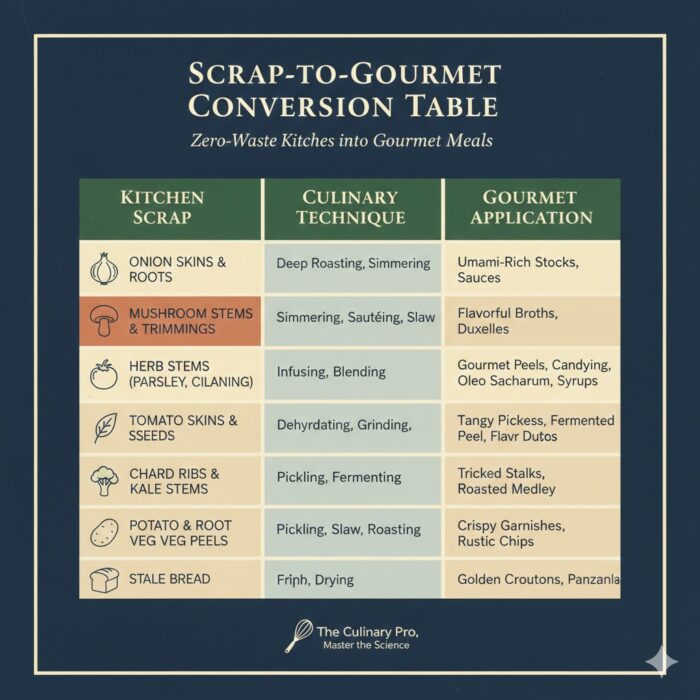
Aromatic Bases: Save leek greens, onion skins, and mushroom “feet” in the freezer. They are the essential building blocks for deep, mahogany-colored stocks and consommés.
-
The Power of Powders: Dehydrate tomato skins or citrus rinds and grind them into fine powders. These provide a concentrated “umami hit” or acidic brightness when dusted over a finished dish.
-
Pickled Textures: Don’t discard chard stems or broccoli stalks. Their dense structure is perfect for quick-pickling, adding a necessary crunch and acidity to rich, fatty proteins.
-
Infused Fats: Herb stems and garlic ends shouldn’t be tossed; steep them in warm oil or butter to create fragrant fats for finishing pasta or searing scallops.
Zero-waste cooking is the ultimate expression of culinary respect. When we challenge ourselves to transform a “scrap” into a gourmet component, we aren’t just saving money — we are expanding the boundaries of what is possible in the kitchen.